A collaborative project with Reaktor , Finland.
Reaktor has been interested to understand and change way our education system works and in future wants to use AI in our schooling and learning process specially among new generation so they approached us to research on this topic
My role here was a Project Manager and UI/UX Designer collaborating with four other faculty students.
BACKGROUND
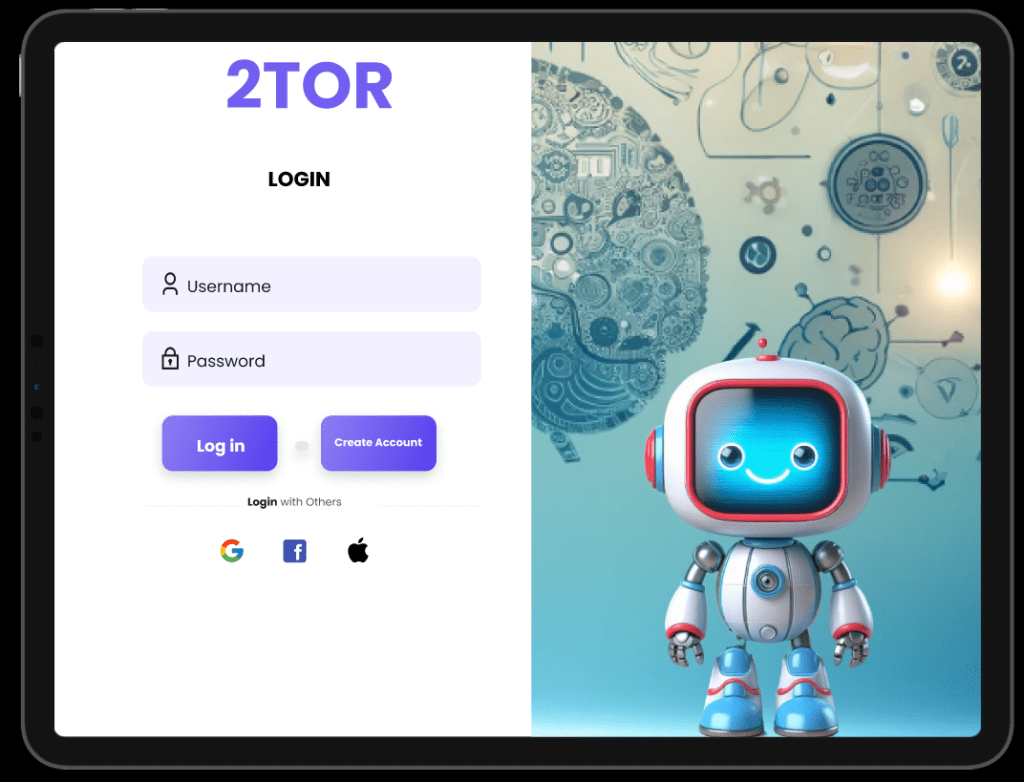
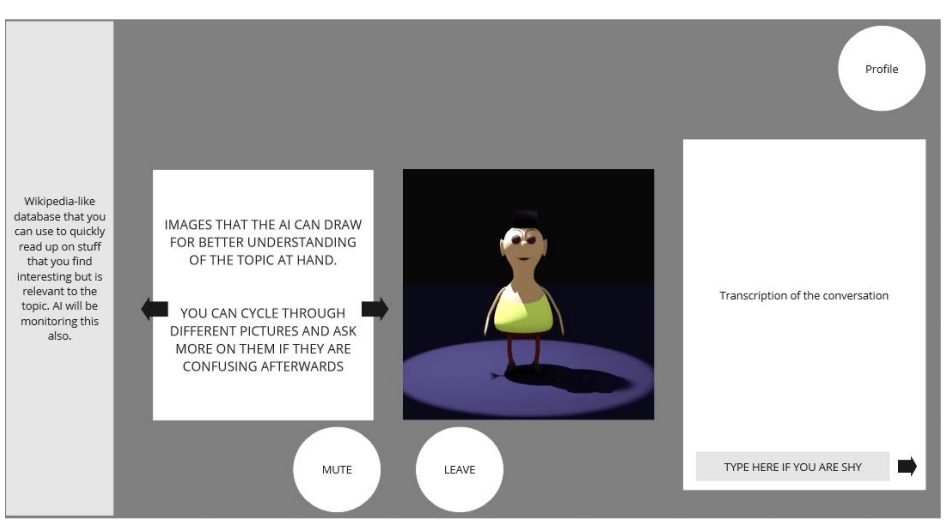
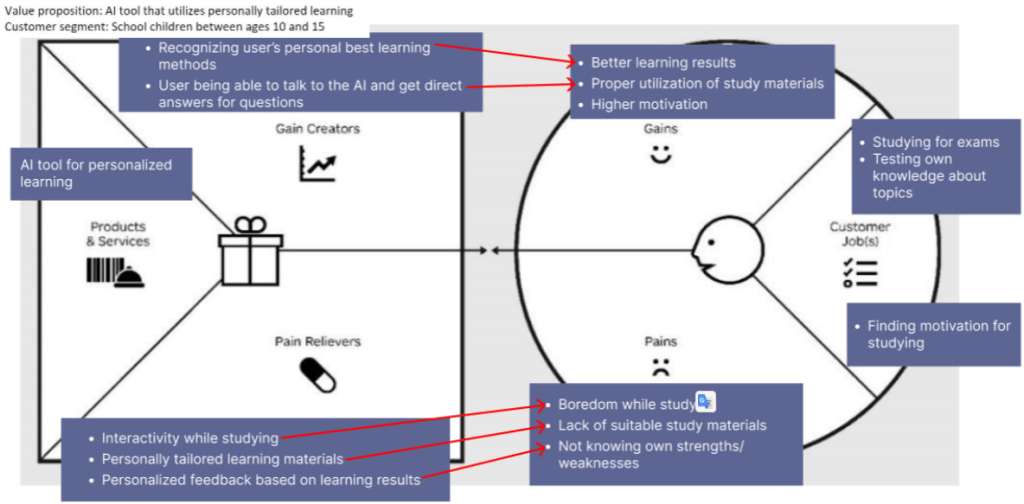
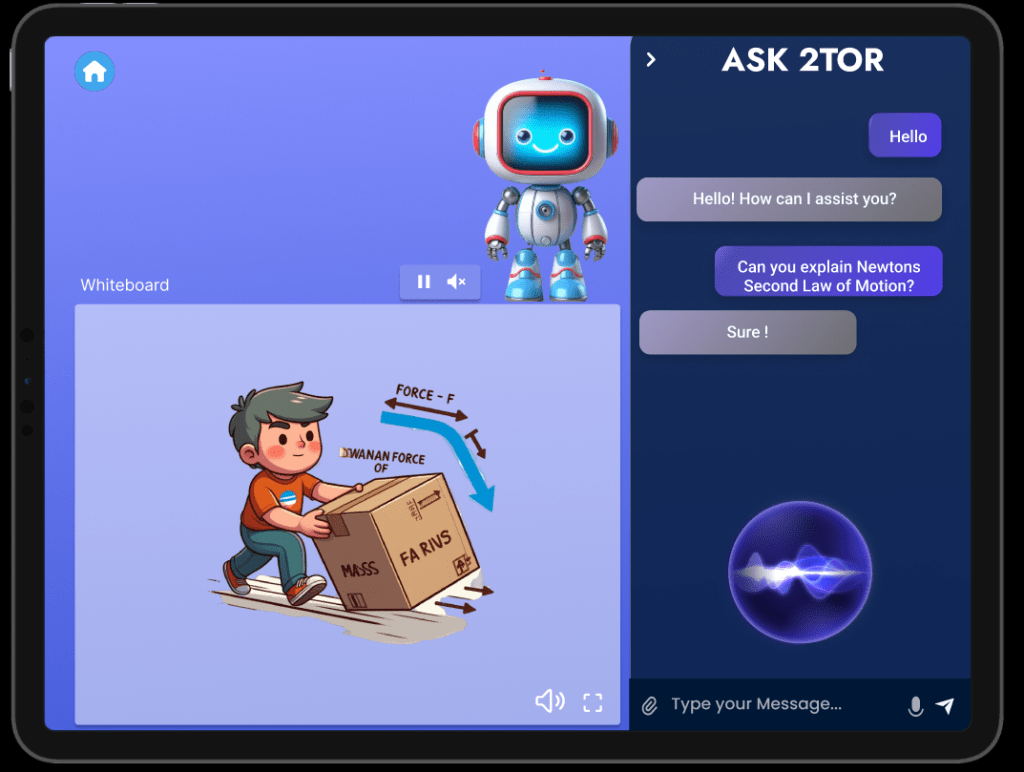
After doing few user research we came this first concept of using a AI conversation model that interacts in real time.
Methodology
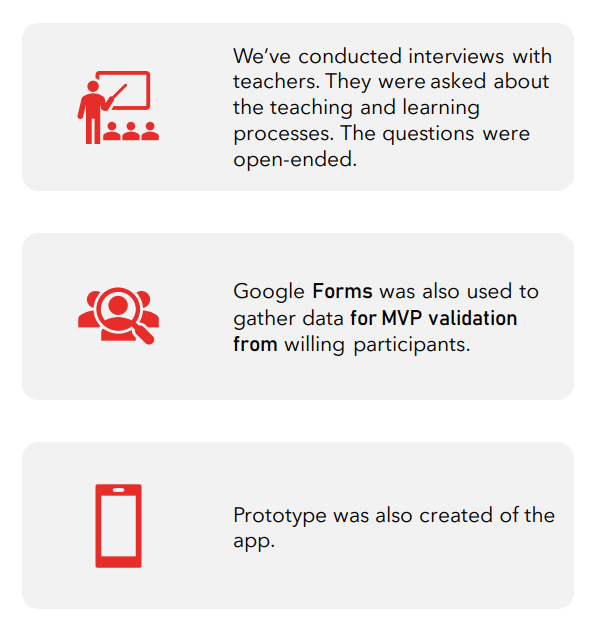
Our research method involved interviewing teachers to gather insights into the main users’ needs, considering ethical limitations regarding direct interviews with children. Teachers, being integral to the educational process, provided valuable perspectives. After conducting the interviews, we meticulously analyzed the gathered data. The interview questions were accessible on the Miro board, and all interviews were compiled in a designated tab in this diary for reference. To ensure ethical compliance, participants were required to fill out a Google form for consent.
We chose this research method because it allowed us to tap into the expertise and experiences of educators which provided us a deeper understanding of user needs. The valuable data we gathered through these interviews significantly informed our design process and decision-making and lead us to more informed and user-centered outcomes.
Analysis
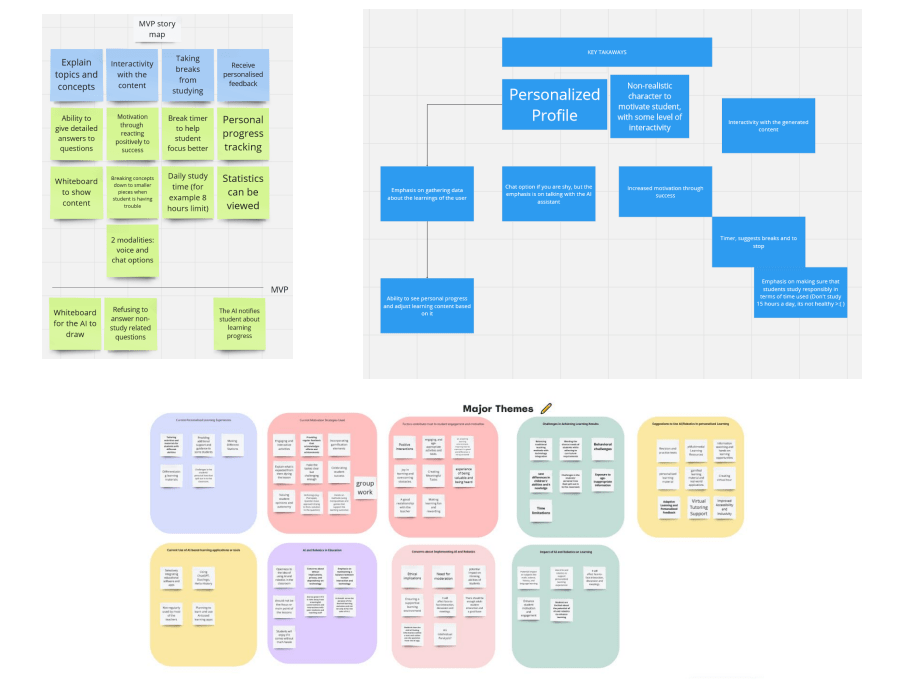
We looked at all the interviews and picked out the main themes and ideas that kept coming up. Then, we carefully studied the data to understand these themes better. After that, we organized everything into major themes to make it easier to see the big picture. To help us with this, we created an affinity diagram, which helped us sort and analyze the data in a structured way. Additionally, we conducted statistical analysis on quantitative data gathered through the questionnaire to identify any trends or correlations. This comprehensive approach to data analysis allowed us to gain valuable insights and draw meaningful conclusions from our study.
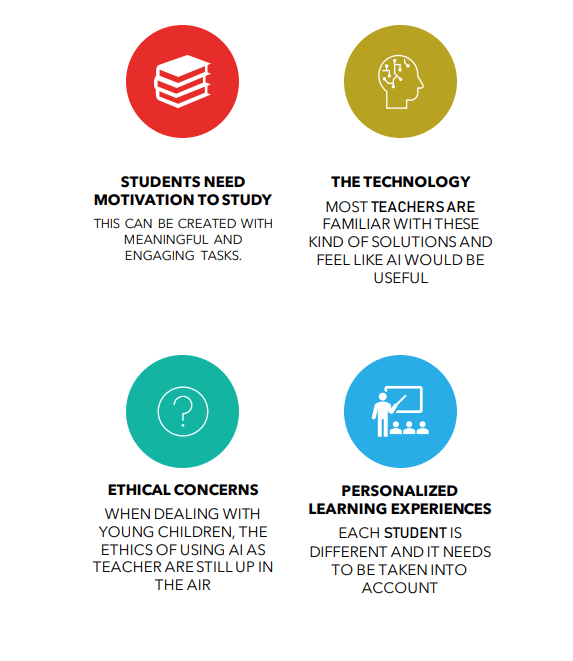
Our research looked at numerous areas of personalised learning experiences, motivating strategies, and the application of AI and robotics in education. The participants highlighted the necessity of personalising learning experiences to specific student requirements, as well as the need for educational techniques that are flexible and adaptable. Teachers addressed a variety of strategies for motivating students, including gamification, rewards,and recognition, with the goal of improving engagement and academic success. Factors such as interactive learning environments, meaningful content, and student autonomy were identified as crucial contributors to student engagement and motivation.
However, we also noted some challenges. These challenges include maintaining student focus, ensuring ethical use of technology, and addressing concerns about dependency on AI and robotics. Participants advised using AI and robots to improve personalized learning experiences, but they also stressed the need of maintaining a supportive learning environment and addressing ethical and privacy issues. There were also concerns raised about potential impacts on student thinking abilities, face-to-face interactions, and discussions which highlighted the need to balance human interaction with technology-based learning.
Aa whole, our research results highlight the challenging dynamics of incorporating AI and robots into education while ensuring ethical and effective use. The benefits of personalized learning and new technology are becoming more widely recognized, but there is also a need to carefully evaluate the ethical, pedagogical, and practical consequences in order to develop meaningful and effective learning experiences.
Key Findings
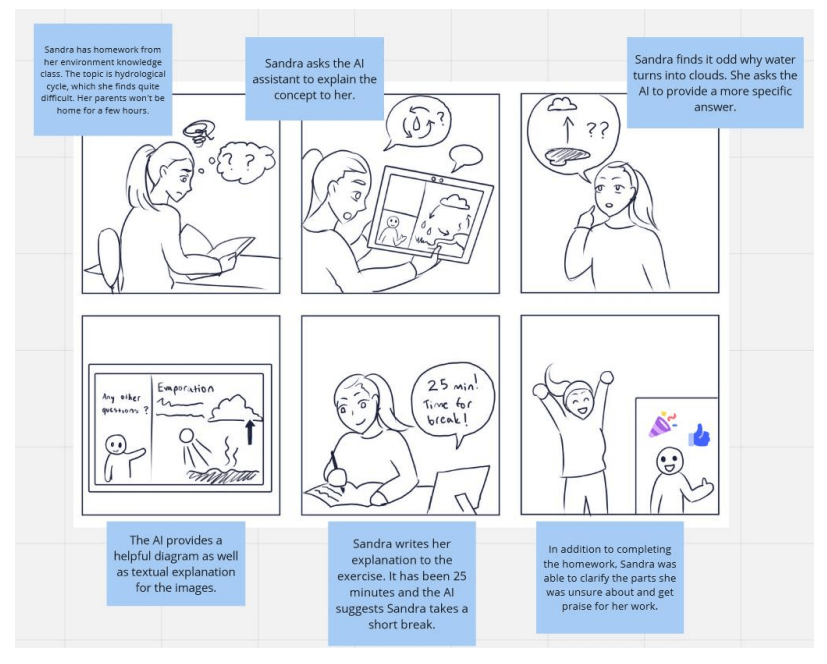
Participants agreed that our MVP has
potential to be useful in a use case like in the
storyboard could make learning more
interactive.
Some ethical concerns were raised, for
example:
- How to make the student not only copy
answers - Will increased engagement or
gamification lead to a lack of focus - AI might have challenges in tackling
complex topics
Final Design
 Prajjwol